 Michael
It has been a super long time since I posted, and I figured I might try blogging again. Today, I want to talk about leaving Windows for a Linux operating system called Bazzite. I made the decision to jump ship after watching a YouTube video about the bloat and tracking Microsoft is jamming into Windows 11 these days. You can check that video out HERE!
I should clarify for the record, however, that what that video leaves out is that the PCs with this feature enabled are newer generation machines carrying the CoPilot+1 label. These are specific PCs with built-in local AI chips on the motherboard. I actually learned this after I made the switch to Bazzite Linux. So, if you landed here because you’re worried Microsoft is watching your every move while you’re away from your PC, they aren’t—not yet, as far as I know. Even though this tracking is limited to specific Copilot-branded hardware, it didn’t impact my 4-year-old Origin PC. Regardless, I still don’t regret the switch to Linux.
The Windows Bloat
In my opinion, the fundamental problem with Windows is that it has been in development for decades and is bloated beyond reason. The OS sits on a bed of legacy code that has existed almost as long as I have been alive, and it just isn’t well optimized. Because Windows is forced onto nearly all retail computers worldwide, it comes pre-loaded with software that aggressively bogs you down. If it isn’t Microsoft forcing Edge on you, it’s your PC manufacturer getting paid by third parties to dump a bunch of bloatware you never asked for—tools you’re supposedly “not supposed to live without.” By the time you finish the initial setup, your system is already noticeably slower due to all the extra startup programs and mandatory updates.
Fortunately, Linux offers a breath of fresh air. It’s an open-source OS that is extremely stable—powering about 90% of the internet backbone today—while remaining efficient and truly free. Thanks to Valve (the parent company of Steam) and their work on Proton (The Windows Compatibility Layer)2 Linux has finally become a serious contender as a PC-gamer-friendly operating system.
Why Bazzite?
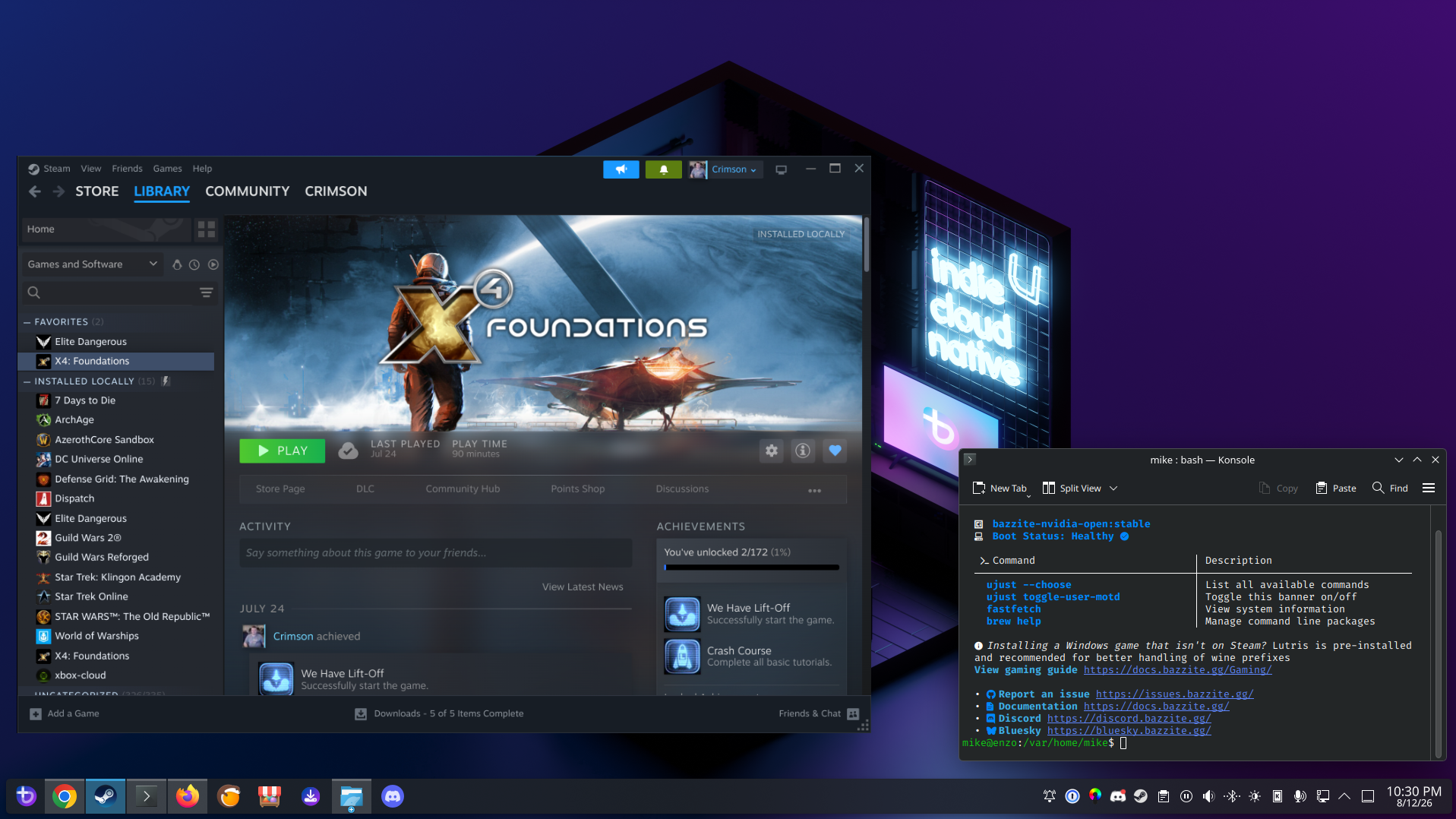
Honestly, I looked at SteamOS the one Valve made for their handhelds and found some issues with it. It is not designed for Multi-monitor support an that was important for me. As a Linux system admin I am already somewhat familiar with Linux so that made my transition easier. For me Bazzite had the best of both world. It comes with Steam pre-baked into it and out of the hundreds of Linux distributions that exist it was loaded with all the important stuff most gamers would need to get into game fast.
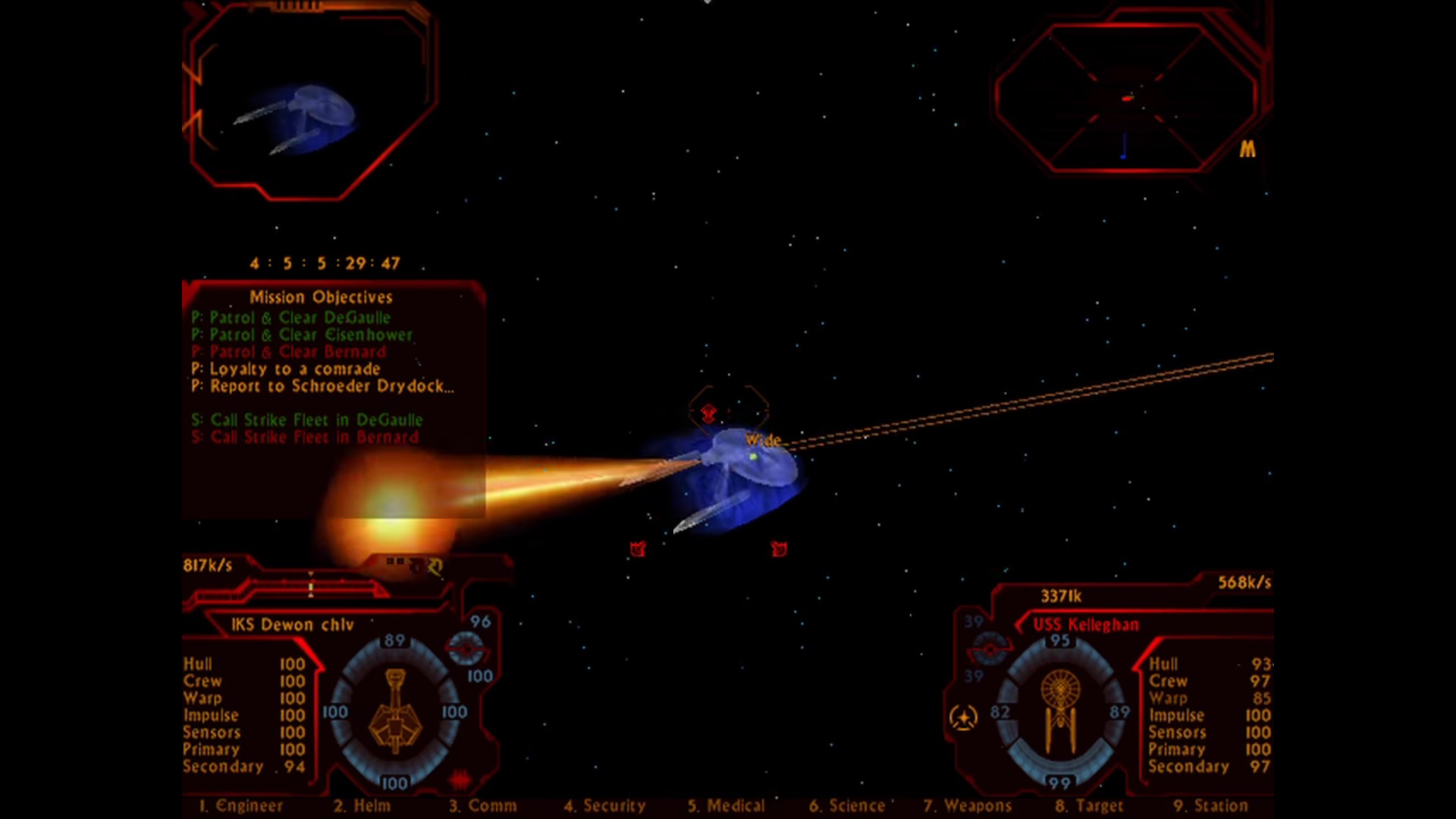
Bazzite also comes with Lutris the video game preservation project preinstalled and I have found it easier to run super old games like Star Trek: Klingon Academy easier then windows. I have also been able to Install ChromiaCraft a World of Warcraft Wrath of the Litch King Client and Play classic WoW on a private server. In addition to ArchRage an Archage Private server client. That one took a bit of extra effort but it runs well. I have been able to play 100% of my Steam library so far.
The Cons
- Bazzite is Atomic / Immutabl3e
– This means the OS can not be modified directly, this makes package installs a bit more complicated.
– Limit’s OS customization and some tools that need direct OS access may not work out of the box without teaks.
– However an Atomic OS is generally very safe and is hardened from most Malware that might try to take over. - No Local XBOX Games! AT ALL! I bought Forza Horizon 6 on XBox for PC and I wish now I had done it on Steam. My game is totally unplayable in Linux because of this choice.
- No Native Google Drive Client. I use Google Drive heavily and it took a lot of extra steps to get direct access to it on Bazzite, setting up Google API keys and rsync / rclone. It works but it’s not as intuitive to use as the Windows Desktop client was. I was surprised Google has not released such a client given that ChromeOS is on Linux but in their mind nothing should live on the local PC everything belongs in the cloud in their opinion I suppose.
Final Verdict
Do i regret dumping Windows for Linux? The short answer is no, and at this time I do not plan to go back. I like the large free library of software, easy access to dev tools, large compatibility with games. I often wonder if I should have picked a none Atomic OS lie CachyOS based on Arch Linux which gives you full control over the system files, but I recently learned Arch Linux which Cachy is based on has had a lot of security holes, and with that I am quite happy to need to take a few extra steps to either bake specific packages I want straight into the OS with ujust rpm-os-tree. Alternatively installing software with Flatpaks and adjusting permissions apps get with Flatseal being a far more secure OS deployment.
I tried Linux gaming 15 years ago. It went terrible and I swore it off until just recently. If not for the efforts of Valve and the Proton development team I would not be here recommending the move now. If you would prefer a video that captures why Migrations from Windows is easier then ever before Linus Tech Tips have done a few great videos on it recently over on YouTube. Why Gaming on Linux Suddenly Matters .
- A Copilot+ PC is a fast Windows 11 computer with a built-in Neural Processing Unit (NPU) that performs at least 40 trillion operations per second (TOPS). This special chip runs local artificial intelligence tasks right on your device without slowing down your main processor. ↩︎
- Steam’s Proton is a compatibility layer developed by Valve in cooperation with CodeWeavers. It allows Windows-exclusive video games to run seamlessly on Linux-based operating systems, such as SteamOS on the Steam Deck, by translating Windows game code and graphics commands into Linux-compatible equivalents. ↩︎
- Atomic immutable describes a system or data structure where updates happen completely as a single, indivisible all-or-nothing step (atomic), and the core files cannot be changed or edited during normal use (immutable). If an update fails, it rolls back safely with no broken pieces left behind. [1] ↩︎
The Bazziite Logo is the Copyright Property of Bazzite.gg and their dev team.